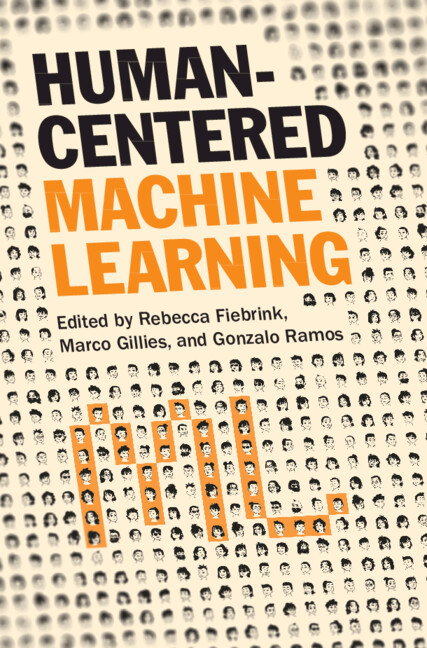
Human-Centered Machine Learning
Fiebrink, R., Gillies, M., Ramos, G.
Cambridge University Press (edited volume), 2026
Co-edited volume bringing together perspectives on designing, building, and studying machine learning systems with people at the center — spanning the arts and humanities, UX measurement, explainability, and the social context of ML.
ImaginationVellum
Marquardt, N., Roseway, A., Romat, H., Panda, P., Pahud, M., Ramos, G., Drucker, S., Wilson, A. D., Hinckley, K., Riche, N.
ACM Symposium on User Interface Software and Technology, 2025
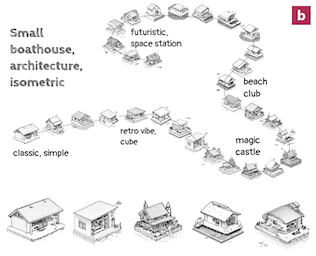
ImaginationVellum is a multi-modal canvas for early-stage visual ideation and sketching with generative AI, where the canvas is the prompt. ImaginationVellum employs the entire 2D canvas as an active prompt space, where layout and composition of elements steer generative visual outcomes.
Supporting Creative Workflows with Generative AI
Palani, S., Ramos, G.
arXiv preprint 2508.19517, 2023-25
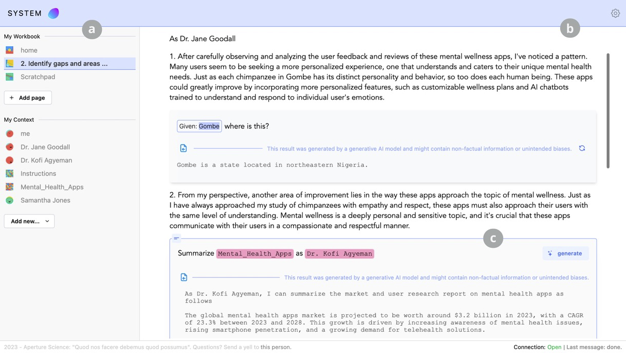
Orchid is an AI-fueled notebook that seamlessly integrates LLMs into creative workflows with rich context management, bespoke commands, and access to expert personas. Participants using it produced more novel and feasible outcomes with stronger intent alignment, control, and transparency versus baseline.
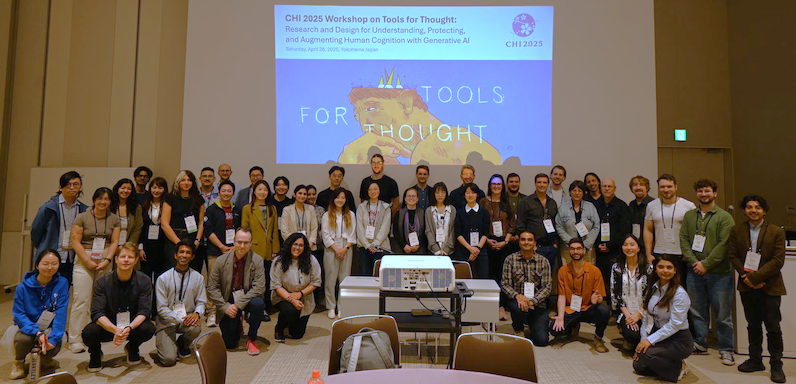
A Synthesis of the CHI 2025 Tools for Thought Workshop
Tankelevitch, L., Glassman, E. L., He, J., Kittur, A., Lee, M., Palani, S., Sarkar, A., Ramos, G., Rogers, Y., Subramonyam, H.
arXiv preprint 2508.21036, 2025
This report synthesizes outcomes from the CHI 2025 Tools for Thought workshop, examining how generative AI supports and undermines human cognition. It identifies key tensions, risks, and design opportunities for systems that enhance productivity and creativity while preserving user agency and cognitive growth.
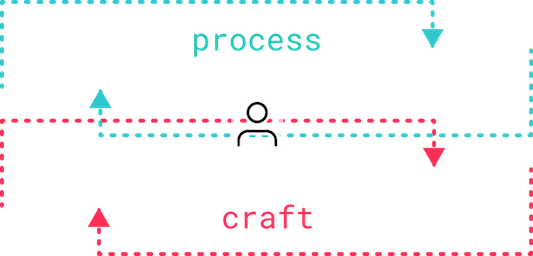
Orchestrating Creativity in the Age of GenAI
Palani, S., Ramos, G.
Proceedings of the 16th Conference on Creativity & Cognition (C&C '24), 2024
How do creative practitioners incorporate generative AI across project stages? Using interviews, videos, and survey reflections on completed projects, we identify perceived roles, challenges, benefits, and interaction patterns, then propose design opportunities for more human-centered creativity support tools.
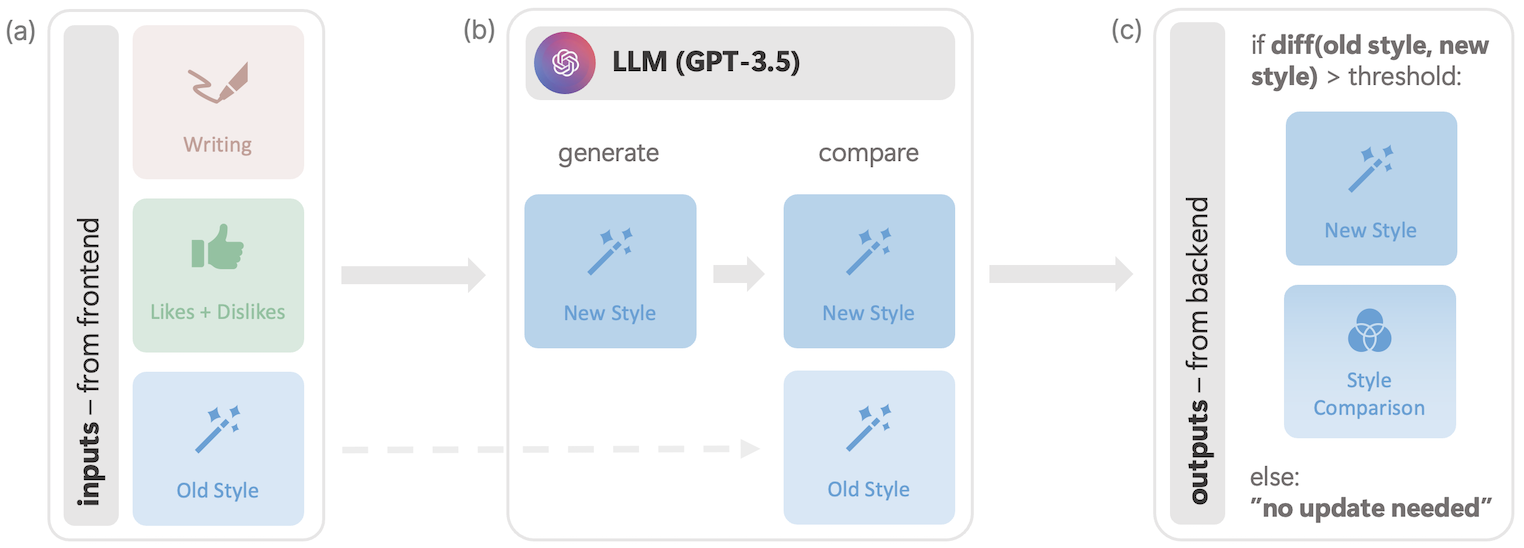
Preserving Agency and Ownership in Human-AI Writing
Yeh, C., Ramos, G.
arXiv preprint 2402.08855, 2023-24
GhostWriter is a collaborative human-AI writing system that introduces agency cues and LLM feedback to better preserve writers' agency and ownership while still improving writing quality. Across two studies, the paper reports that participants retained stronger ownership and preferred workflows that make AI involvement explicit and controllable.

Pearl: Machine-Assisted Reflection
Jörke, M., Sefidgar, Y. S., Massachi, T., Suh, J., Ramos, G.
International Conference on Intelligent User Interfaces, 2023
Pearl is a calendar-based interactive system where users visualize data sources, tag regions of interest, and receive machine-generated insights saved to a reflection journal. In a study with 12 non-expert participants, all gained insights into their workplace wellbeing.
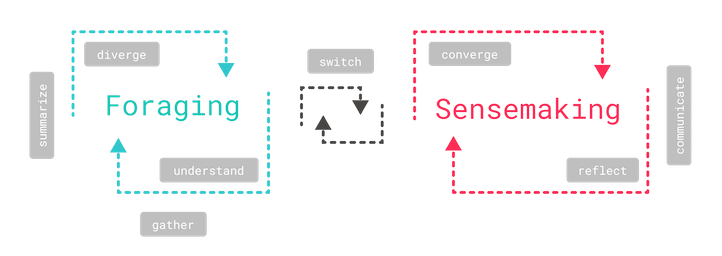
Machine Assisted Sensemaking
Ramos, G., Rachatasumrit, N., Suh, J., Ng, R., Meek, C.
ACM Transactions on Interactive Intelligent Systems (TiiS), 2022
Guided by sensemaking theory, we built ForSense, a browser extension for accelerating people's online research experience by integrating online research's multiple stages, and providing machine assistance by leveraging recent advances transformer models.
Interactive Machine Teaching
Ramos, G., Meek, C., Simard, P., Suh, J., Ghorashi, S.
Human-Computer Interaction, 2020
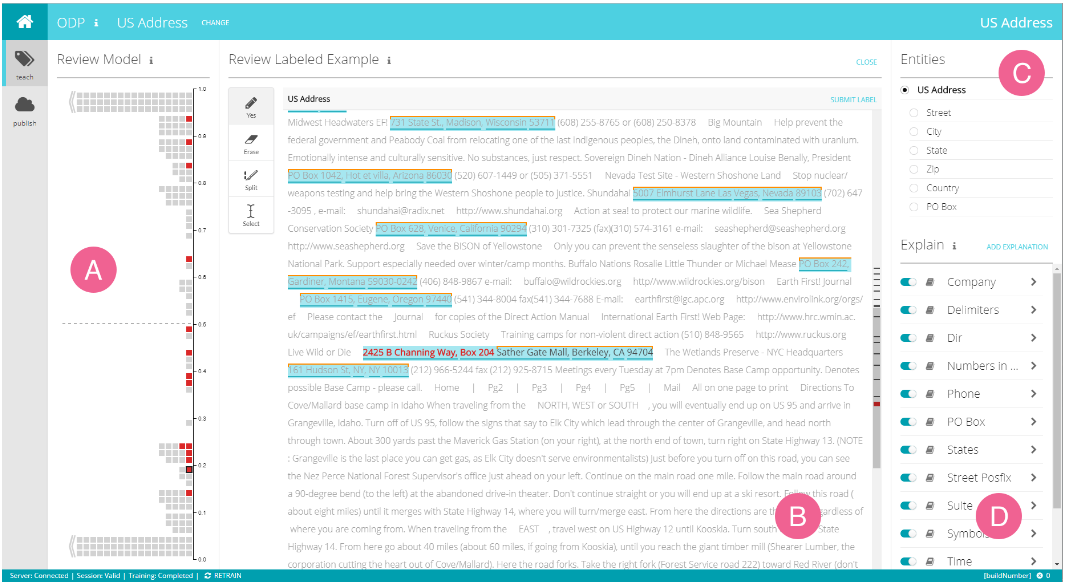
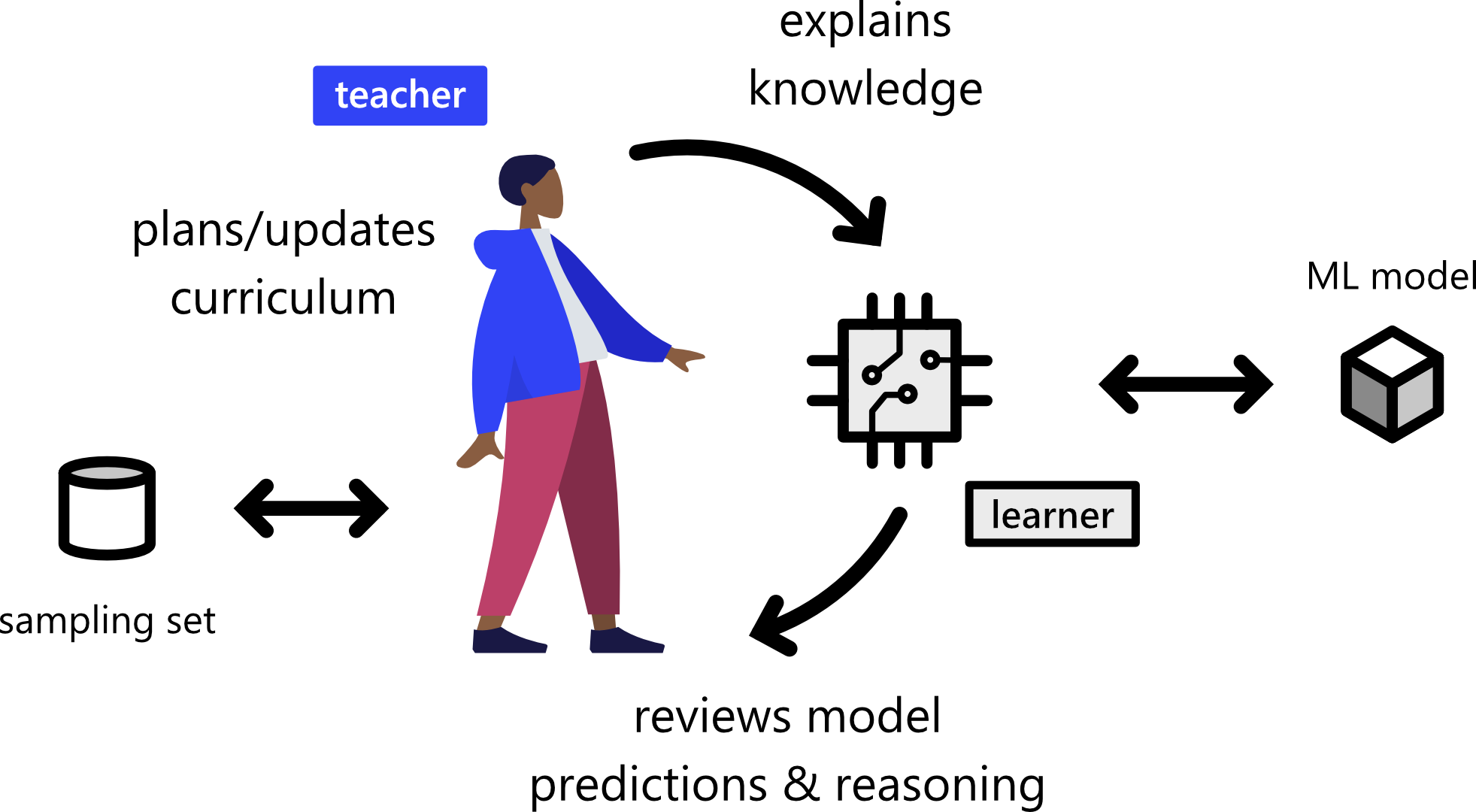
We describe interactive machine teaching (IMT) and its potential to simplify the creation of machine-learned models where the human-in-the-loop takes the role of a teacher teaching a machine how to perform a task. IMT processes can enable people to leverage their intrinsic teaching capabilities, and make machine learning methods accessible to subject-matter experts, while creating semantic, debuggable machine learning models.
PivotPaths
Dörk, M., Riche, N.H., Ramos, G., Dumais, S.
IEEE Transactions on Visualization and Computer Graphics 18(12), 2012
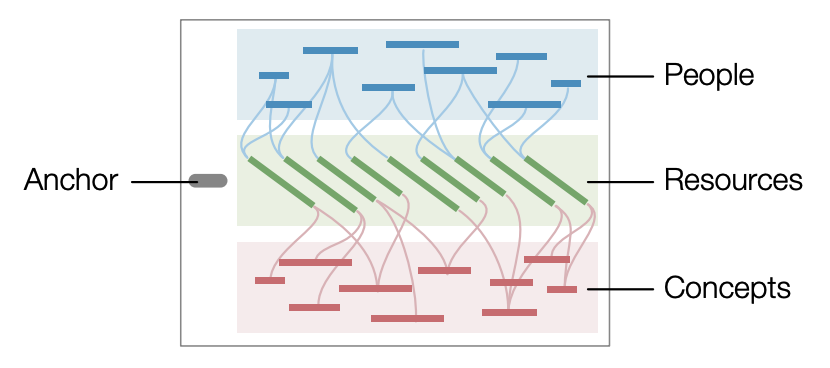
PivotPaths visually and interactively permits the exploration of faceted information resources, by revealing visual paths that invite the viewer to 'take a stroll' through an information space while encouraging exploration and serendipitous discoveries.
Video Direct Manipulation
Dragicevic, P., Ramos, G., Bibliowitcz, J., Nowrouzezahrai, D., Balakrishnan, R., Singh, K.
Proceedings of the twenty-sixth annual SIGCHI conference on Human factors in computing systems, 2008
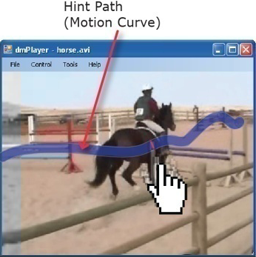
We present a method for browsing videos by directly dragging their content. This method brings the benefits of direct manipulation to an activity typically mediated by widgets and empowers users on space-defined seeking task.
Pointing Lenses
Ramos, G., Cockburn, A., Balakrishnan, R., Beaudouin-Lafon, M.
Proceedings of the SIGCHI conference on Human factors in computing systems, 2007
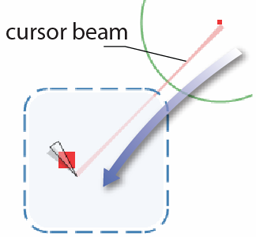
Pointing lenses help users acquire and select targets by presenting them with an enlarged visual and interaction area. We present and study three pointing lenses for pen-based systems and show that participants find all pointing lenses beneficial.
Pressure Marks
Ramos, G., Balakrishnan, R.
Proceedings of the SIGCHI conference on Human factors in computing systems, 2007
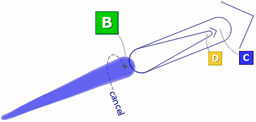
Pressure marks are pen strokes where the variations in pressure make it possible to indicate both a selection and an action simultaneously. Users perform faster selection-action interactions with pressure marks than with a combination of lassos and pigtails. We present and discuss a number of interaction designs that incorporate pressure marks.
Tumble! Splat!
Ramos, G., Robertson, G., Czerwinski, M., Tan, D., Baudisch, P., Hinckley, K., Agrawala, M.
Proceedings of the working conference on Advanced visual interfaces, 2006
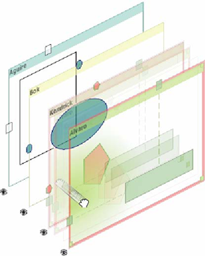
We characterize a design space of techniques that facilitate access to occluded graphic content. We also introduce two new tools, Tumbler and Splatter, which represent unexplored areas of the design space and provide a more direct way to engage with overlapping and complex graphic assets.
Fluid Zooming and Sliding
Ramos, G., Balakrishnan, R.
Proceedings of the 18th annual ACM symposium on User interface software and technology, 2005
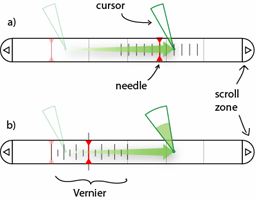
Zoom Sliding enables the fluid integrated manipulation of scale and parameter manipulation through the simultaneous control of force and movement input. We introduce and study the concept through controls, prototypes and studies.
Stitching
Hinckley, K., Ramos, G., Guimbretiere, F., Baudisch, P., Smith, M.
Proceedings of the working conference on Advanced visual interfaces, 2004
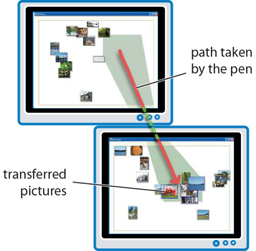
Stitching is a new interaction technique that allows users to combine pen-operated mobile devices with wireless networking by using pen gestures that span multiple displays. To stitch, a user starts moving the pen on one screen, crosses over the bezel, and finishes the stroke on the screen of a nearby device.
Fluid Control and Annotation of Video
Ramos, G., Balakrishnan, R.
Proceedings of the 16th annual ACM symposium on User interface software and technology, 2003
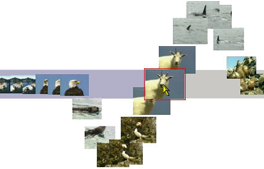
We explore interaction and visualization techniques for fluid navigation, segmentation, linking, and annotation of digital videos. These techniques are developed within a prototype leveraging the use of pressure-sensitive digitizer tablets.